
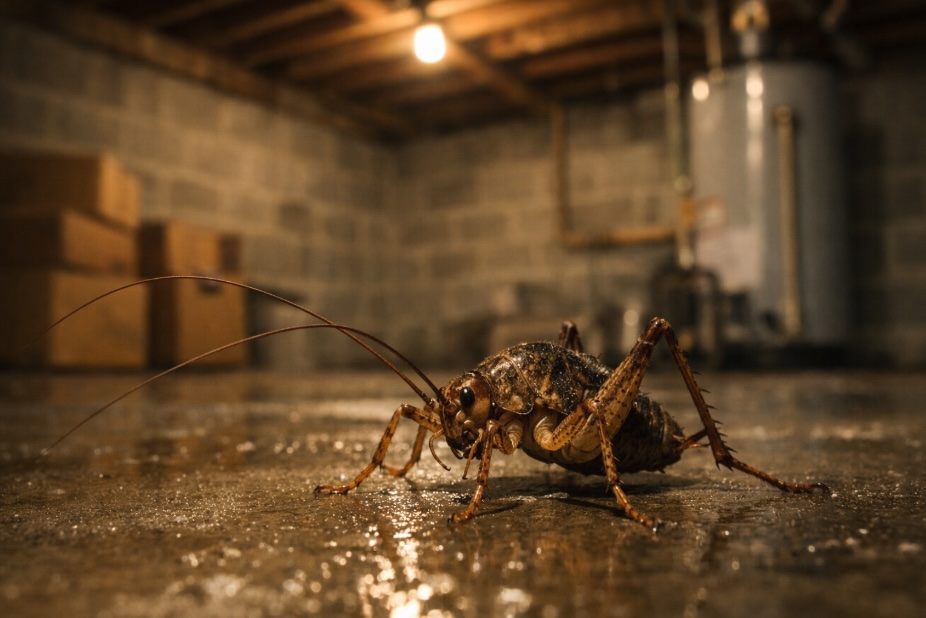
A single cricket chirping behind a wall is easy to ignore. Dozens of them jumping across a basement floor in the dark is a different story. Crickets are one of the most underestimated pests in central New Jersey. They reproduce quickly, feed on household materials, and attract secondary pests like spiders and centipedes once populations grow.
Callahan’s Termite and Pest Control has handled cricket infestations in homes and businesses across Ocean, Monmouth, and Middlesex counties for over 25 years. Our Brick-based team knows where these insects hide and how to stop them from coming back, offering specialized pest control services in Monmouth and Ocean Counties tailored to local conditions.
Cricket Species Found in Central New Jersey
Three species account for the majority of indoor cricket complaints in our service area.
Camel Crickets
Also called cave crickets or spider crickets, these are the species most often found in New Jersey basements. They do not chirp. Instead, they startle homeowners by leaping suddenly when disturbed. Their arched, humpbacked body and long legs give them a spider-like appearance that many people find unsettling.
Camel crickets are drawn to dark, damp spaces. Basements, crawl spaces, utility rooms, and garages are their preferred habitat indoors. Outdoors, they shelter under woodpiles, landscape timbers, leaf litter, and stones. They can survive up to two years and will feed on fabric, cardboard, houseplants, and other organic material.
In towns like Toms River, Brick, and Jackson, homes with unfinished basements or exposed crawl spaces tend to see the heaviest camel cricket activity.
Field Crickets
Field crickets are the ones responsible for the loud chirping heard on summer nights. Males rub their wings together to attract mates. Adults are dark brown to black and measure roughly one inch long. They gather in mulch beds, tall grass, and around foundation plantings before moving indoors in fall.
Field crickets chew through fabric, paper, and wallpaper. Large groups can damage curtains, stored clothing, and upholstered furniture over time.
House Crickets
House crickets are smaller and lighter in color, typically yellowish-brown with three dark bands across the head. They prefer warm areas near kitchens, fireplaces, and heating systems. Like field crickets, the males chirp persistently at night.
These crickets are often carried indoors through grocery bags, deliveries, or firewood. Once established near a heat source, they reproduce and spread through wall cavities and closets.
Why Crickets Thrive Along the Jersey Shore
The coastal climate across Ocean and Monmouth counties creates ideal breeding conditions. Humid air off Barnegat Bay and the Atlantic keeps soil damp well into autumn. Sandy, loose ground allows eggs to be deposited easily. Shaded lots with heavy vegetation give crickets reliable cover during daylight hours.
Properties in Lakewood, Freehold, and the bayfront neighborhoods of Toms River are particularly affected. Homes near wooded lots or retention basins also see elevated activity. Mulch beds pushed tight against foundation walls act as a direct pathway from outdoor breeding sites to basement entry points.
Damage and Secondary Problems
Crickets feed on cotton, silk, wool, paper, and cardboard. Stored clothing in basement closets and boxes of documents are common targets. The damage from a small group is minor. A large population, though, can ruin seasonal wardrobes and stored linens within weeks.
Equally important is what cricket populations attract. Spiders, centipedes, and certain beetle species all prey on crickets. A basement full of camel crickets will often lead to a noticeable increase in wolf spiders and house centipedes shortly after.
What Makes Professional Treatment Necessary
Crickets are nocturnal. They remain hidden inside wall voids, behind insulation, and under stored items during the day. Surface sprays purchased from hardware stores dry before these insects ever contact them, which is why many homeowners value Callahan’s proven pest control results and professional follow-up.
Effective treatment requires identification of the species involved, location of indoor harborage areas, and elimination of moisture and entry points that sustain the population. Each of those steps demands a trained eye and products that reach concealed spaces.
How Callahan’s Approaches Cricket Infestations
Our process starts with an inspection of the interior and exterior of the structure. Technicians identify the cricket species, map out moisture sources, and locate entry points along the foundation, sill plate, and utility penetrations.
Treatment is then applied to targeted zones — not just visible surfaces. Crack and crevice applications reach wall voids, joist bays, and sill areas where crickets congregate. Outdoor perimeter treatments reduce the volume of insects migrating toward the structure from mulch beds, woodlines, and drainage areas.
Follow-up visits confirm that activity has dropped and allow adjustments if conditions change with the season.
Steps Homeowners Can Take Between Visits
A few practical changes make a noticeable difference. Firewood should be stored at least 20 feet from the foundation. Mulch beds can be pulled back several inches from exterior walls. Door sweeps and weatherstripping should be checked and replaced if worn.
Reducing basement humidity with a dehumidifier removes one of the key conditions that camel crickets depend on. Switching outdoor lighting near doors to yellow or sodium vapor bulbs also helps. Crickets are drawn to standard white lights at night, and that attraction funnels them toward entry points.
Service Area
Callahan’s provides cricket pest control across Ocean, Monmouth, and Middlesex counties. Our technicians respond regularly to calls in Brick, Toms River, Jackson, Lakewood, Freehold, Red Bank, Edison, and the surrounding communities as part of our broader New Jersey pest control services for homes and businesses.
Why Choose Callahan’s
We are a family-run company based in Brick with over 25 years of experience. Our team uses proven pest control methods and focuses on safe, detailed, and well-planned service.
Local residents rely on us because we show up on time, explain each step, and create straightforward solutions that help rid buildings of persistent cricket activity.