Every May, the calls start coming in. Homeowners at the Jersey Shore are seeing trails of ants in their kitchens. Some notice them along baseboards. Others find them near sliding glass doors that open to the backyard deck.
It is not a coincidence that this happens around the same time each year. In Ocean County, the seasonal pattern is predictable. Understanding it can help you act before a small problem becomes a large one.
Why Ocean County Has a Particular Ant Problem
Ocean County’s soil and climate create ideal conditions for ant colonies to grow and spread. The sandy, well-drained soil found across much of the county is easy for ants to tunnel through. Pavement ants and odorous house ants build nests quickly in this kind of ground.
On top of that, the county’s coastal humidity keeps organic material moist. Moist wood around deck posts, crawl space framing, and window frames is exactly what carpenter ants look for. Homes built in the 1970s and 1980s — common throughout Brick and south Toms River — often have older wood framing that is more vulnerable.
Seasonal rentals near the shore add another layer of risk. Properties that sit empty through the winter and open up in late spring are prime targets. Ants establish foraging trails indoors while no one is around to notice.
When Ant Activity Peaks in Central Jersey
Ground temperatures in Ocean County typically reach the threshold that triggers ant foraging activity in late April or early May. By June, most species are operating at full colony strength.
Odorous house ants are typically the first to appear indoors. They follow moisture and food trails aggressively. Meanwhile, carpenter ants — which are larger and darker — tend to show up slightly later as they push deeper into homes looking for nesting sites.
Pavement ants become visible along driveways, walkways, and foundation lines. Though less destructive than carpenter ants, they can still find their way into kitchens and pantries.
What Draws Ants Into Your Home
Ants do not come inside at random. They follow specific signals. The most common entry points in NJ homes include:
- Mulch beds pushed up directly against the foundation
- Gaps along sliding door thresholds and screen door frames
- Cracks in concrete slab foundations common in ranch-style homes
- Utility penetrations in crawl space walls
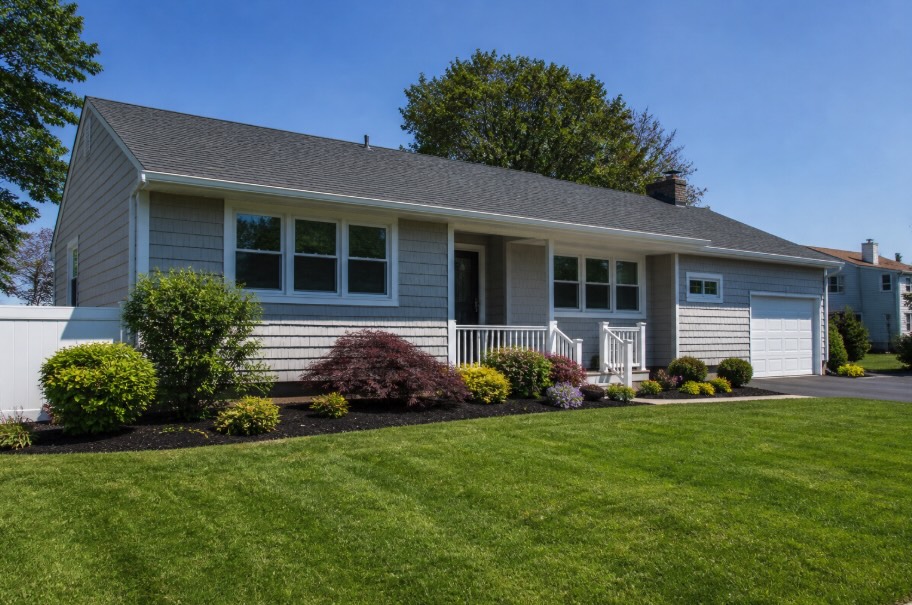
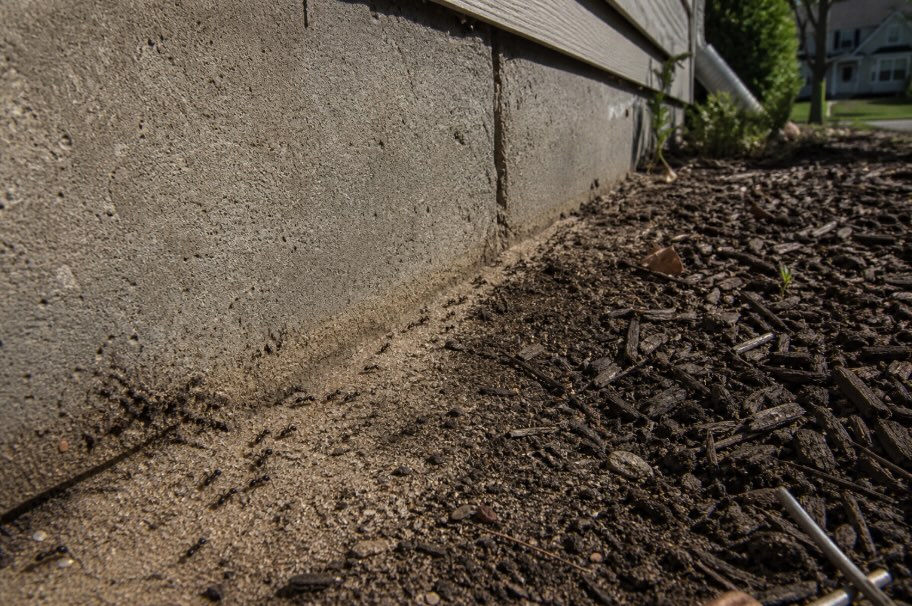
Mulch is a significant factor locally. Many Ocean County homes have landscaped beds that wrap tightly against siding and concrete blocks. That combination of moisture and organic material keeps ant colonies thriving just inches from the home’s interior.
The Problem With DIY Treatments
Store-bought sprays kill the ants you can see. They rarely reach the colony. In fact, certain over-the-counter treatments can cause a colony to split, creating two or more new satellite nests. As a result, the infestation spreads rather than shrinks.
Bait stations work better, but species identification matters. The bait formula that attracts odorous house ants does not necessarily work on carpenter ants. Misidentifying the species is a common reason DIY attempts fall short.
Professional treatment targets the colony directly. A licensed technician identifies the species, locates nesting sites inside and outside the structure, and applies the right treatment method. Learn more about Callahan’s pest control services and how the process works.
Carpenter Ants Deserve Special Attention
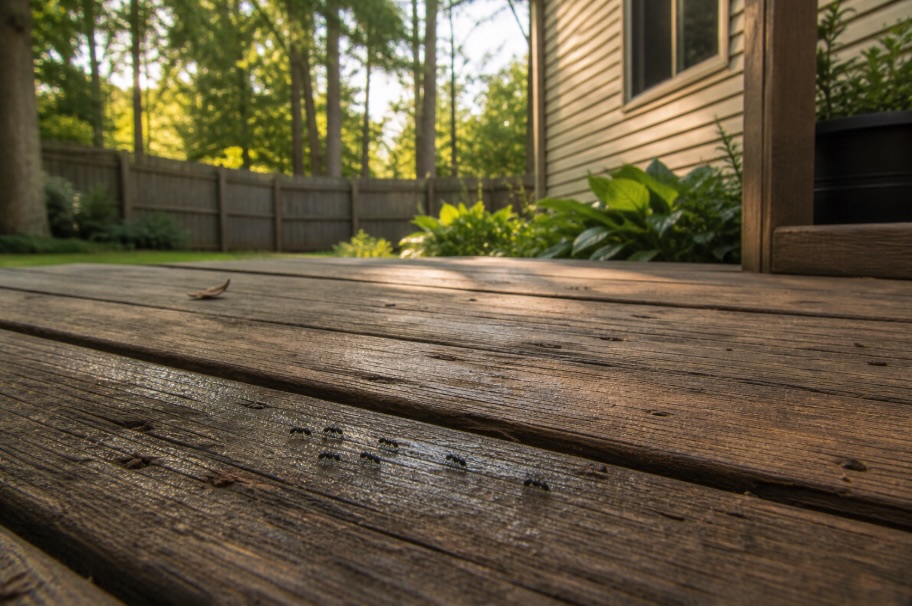
Carpenter ants are worth calling out separately. Unlike termites, they do not eat wood. Instead, they tunnel through it to build galleries. The damage accumulates over time and is often found in crawl spaces, deck ledger boards, and window frames.
If you are seeing large, dark ants inside your home in spring — particularly near windows or the ceiling — that is worth investigating further. Callahan’s offers termite and wood-destroying insect inspections that also identify carpenter ant damage.
How to Reduce Ant Pressure Around Your Property
A few practical steps can make your home significantly less attractive to foraging ants:
- Pull mulch back at least six inches from the foundation.
- Trim any shrubs or ground cover that touches the siding.
- Fix dripping outdoor spigots and ensure gutters drain away from the base of the home.
- Store firewood off the ground and away from the structure.
- Inside, keep counters and stovetops clean, especially overnight. Rinse recycling before storing it.
- Seal pet food in airtight containers.
These steps reduce the signals that draw scouts into your home. Without a scout trail, the colony has less reason to send foragers indoors.
When to Call a Professional
Most ant problems in Ocean County respond well to professional treatment, especially when addressed early in the season. Waiting until summer often means the colony is larger and more entrenched.
If you are seeing ants repeatedly in the same area, or if you are noticing large black ants near wood structures, it is time to have the property inspected. Callahan’s Termite and Pest Control has served Brick, Toms River, Lakewood, and surrounding Ocean County communities since 1991.
Request a free estimate or call 732-899-3030 to schedule an inspection
Related Posts