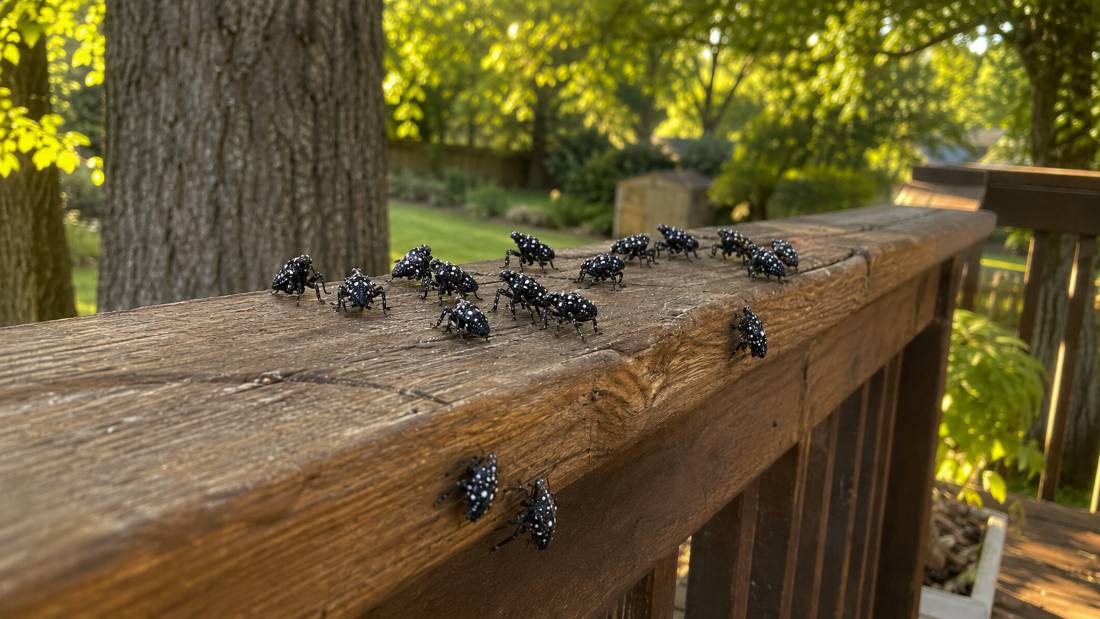
Spotted lanternflies are most visible from July through October, and August is often when populations peak. Adults gather in large numbers on trees, fences, and outdoor furniture. Unlike ticks or termites, this pest does not bite or damage a home’s structure. It threatens landscaping, patios, and outdoor spaces instead, and the state now treats it as a serious agricultural concern.
What a Spotted Lanternfly Looks Like
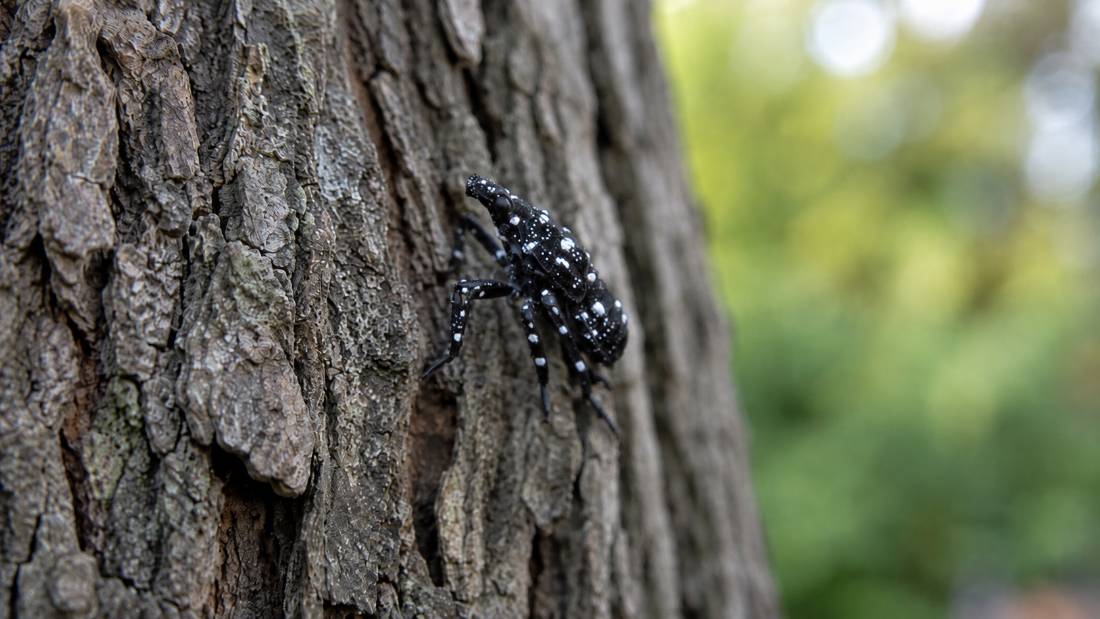
Adults measure about an inch long, with gray forewings dotted in black. Their hindwings show a bright red patch, visible mainly in flight. Younger nymphs start black with white spots, then turn red before reaching adulthood. Egg masses look like dried mud or putty, often laid on tree bark, patio furniture, or firewood.
A Statewide Quarantine Is Now in Effect
Spotted lanternfly was first confirmed in New Jersey in 2018, after arriving from Pennsylvania. Since then, it has spread to every county in the state. The New Jersey Department of Agriculture has expanded its quarantine to cover the entire state, including Ocean, Monmouth, and Middlesex County. The quarantine restricts moving items that can carry the pest, such as firewood, outdoor furniture, and landscaping debris, without first inspecting them.
Why This Pest Causes Real Problems at Home
Spotted lanternflies feed on tree sap and excrete a sticky substance called honeydew. That honeydew coats decks, cars, and pool surfaces below infested trees. Left alone, it grows a black fungus known as sooty mold, which stains hard surfaces and can weaken the plants underneath. Large swarms on porches and patios also make outdoor spaces unusable during peak season.
Tree of heaven is the pest’s preferred host, but it also feeds on maples, willows, and grapevines. Yards with mature shade trees tend to see the heaviest activity.
Where This Pest Shows Up Locally
Older, tree-lined neighborhoods in towns like Toms River and Freehold tend to see heavier lanternfly pressure, since mature shade trees give the insect more places to feed. Properties near rail corridors and industrial areas, common around parts of Middlesex County, also see frequent activity, since lanternflies spread easily along transportation routes. Waterfront decks along the Shore are especially affected in August, when swarms gather on outdoor furniture during peak season.
What Homeowners Can Do Right Now
A few habits make a real difference:
- Scrape and destroy egg masses found on trees, furniture, or firewood between September and April
- Inspect vehicles and outdoor equipment before moving them out of the area
- Remove tree of heaven where possible, since it draws large populations
- Use sticky bands or circle traps on heavily infested trees to catch climbing nymphs
These steps help slow the spread and reduce pressure on a single property, but they rarely solve a heavy infestation on their own.
When to Call a Professional
Large trees, recurring swarms, and heavy honeydew buildup usually call for a stronger approach than home traps alone. Callahan’s Termite & Pest Control has served Ocean, Monmouth, and Middlesex County since 1991, and treats properties for a wide range of seasonal invaders. Professional treatment can include targeted insecticide application on host trees and a property assessment to identify where egg masses are likely to appear next season.
If lanternflies have taken over your yard this summer, contact Callahan’s for a free estimate. Our technicians can also help identify other pests active this time of year, from ants to ticks, and build a plan that covers the whole season.
Request a free estimate or call 732-899-3030 to schedule a Spotted Lantern Fly Treatment For your New Jersey property
Related Posts