
Tick Pest Control in Ocean, Monmouth & Middlesex County, NJ
New Jersey ranks among the top states in the country for reported Lyme disease cases. In 2023, more than 7,200 cases were documented statewide. Ocean County alone recorded 570 cases in 2025, placing it among the highest-risk counties in the state. Monmouth and Middlesex counties report significant numbers each year as well. These are not statistics from remote wooded regions. They come from suburban backyards, school fields, and residential neighborhoods throughout the Jersey Shore.
Callahan’s Termite and Pest Control provides targeted tick control for homes and businesses across all three counties. Our Brick-based team understands the local landscape, wildlife patterns, and seasonal cycles that drive tick activity in this part of the state.
Tick Species Active in Central New Jersey
Three tick species account for the majority of bites and disease transmission in our service area.
Blacklegged Ticks
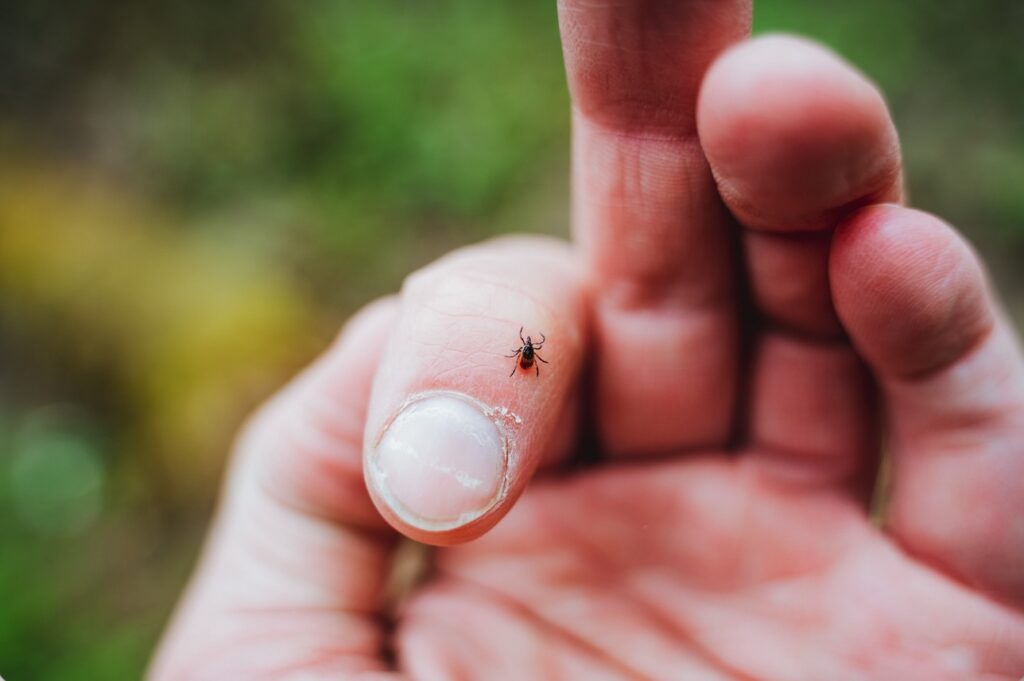
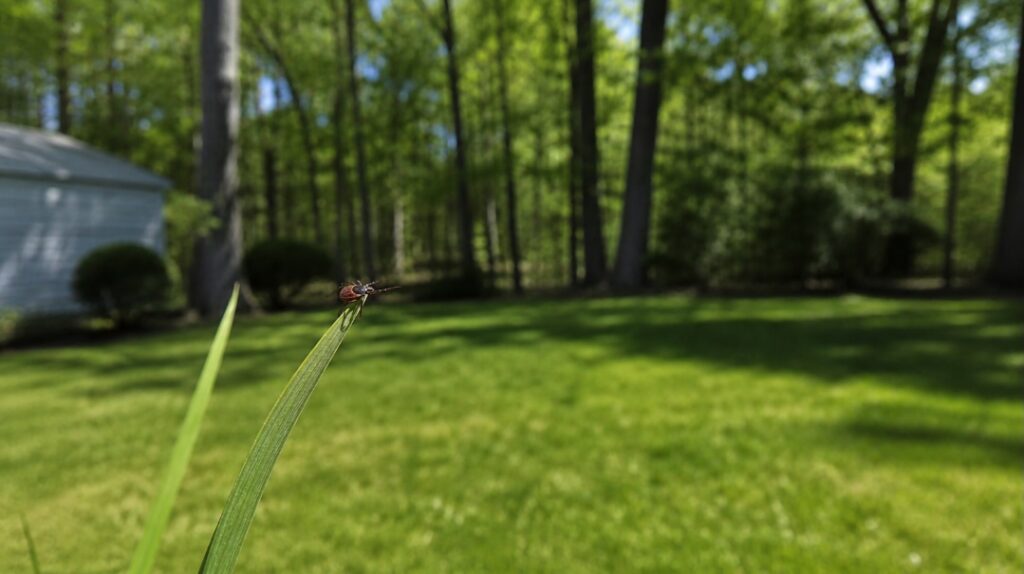
Also called deer ticks, these are the primary carriers of Lyme disease in New Jersey. Blacklegged ticks are small — nymphs are roughly the size of a poppy seed. That makes them extremely difficult to spot on skin or clothing. Adults are active from October through May. Nymphs are most active from May through July, which is when the majority of Lyme transmissions occur.
Research from Rutgers University has found that roughly 25 percent of nymph-stage blacklegged ticks in New Jersey carry Lyme bacteria. Among adults, that number rises to approximately 50 percent.
Lone Star Ticks
Lone star ticks are aggressive biters. They are identified by a single white dot on the back of the adult female. This species has expanded its range northward into Ocean and Monmouth counties in recent years. Lone star ticks are associated with ehrlichiosis and a red meat allergy known as alpha-gal syndrome. They are most active from April through September and are commonly found in wooded trails, overgrown lots, and park edges.
American Dog Ticks
American dog ticks are larger than blacklegged ticks and are found throughout all three counties. They carry Rocky Mountain spotted fever and tularemia. Dogs and outdoor pets are frequent hosts. These ticks prefer grassy meadows, roadside vegetation, and unmaintained yard borders.
How Ticks Reach Your Property
Ticks do not fly or jump. They are carried onto residential properties by wildlife. White-tailed deer, white-footed mice, chipmunks, squirrels, and ground-nesting birds all serve as hosts at different stages of the tick lifecycle.
The connection between rodents and ticks is particularly important. White-footed mice are the primary reservoir for Lyme bacteria in the northeastern United States. Larval ticks feed on infected mice, pick up the bacteria, and then transmit it to humans during their next blood meal as nymphs. A property with an active mouse population is almost always a property with elevated tick numbers.
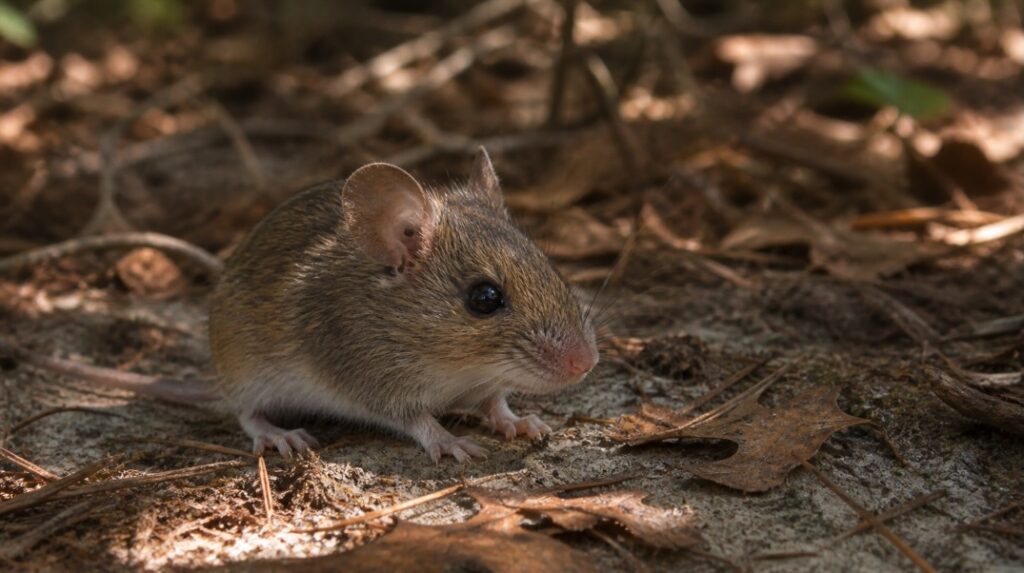
This is one reason that tick control and rodent management work best when addressed together. Reducing the mouse population around a home directly reduces the number of infected ticks developing in the yard.
Where Tick Populations Concentrate
Ticks are not distributed evenly across a property. They concentrate in specific zones that provide shade, humidity, and access to passing hosts.
Along the edges of wooded lots in towns like Brick, Toms River, Jackson, and Howell, ticks wait on low vegetation for a host to brush past. Leaf litter beneath mature trees holds moisture and shelters ticks between feedings. Overgrown borders between maintained lawns and natural areas are the highest-risk zones on most residential properties.
Stone walls, ground-cover plantings, woodpiles, and garden sheds also harbor ticks. In communities closer to the coast — Silverton, Beachwood, Point Pleasant — salt marsh and wetland edges support tick populations that overlap with heavy mosquito breeding areas.
Inland properties in Lakewood, Freehold, Manalapan, and Edison that border wooded lots or parks face year-round exposure. New construction that clears forested land displaces deer and rodents into surrounding neighborhoods, temporarily increasing tick pressure on adjacent homes.
Health Risks Beyond Lyme Disease
Lyme disease receives the most attention, but it is not the only tick-borne illness reported in central New Jersey. Anaplasmosis, babesiosis, ehrlichiosis, and Rocky Mountain spotted fever are all present in the region. A single tick bite can sometimes transmit more than one pathogen at the same time.
Symptoms of tick-borne illness often appear days to weeks after a bite. Fever, fatigue, headache, joint pain, and rash are common early signs. Left untreated, Lyme disease can progress to affect the nervous system, heart, and joints. Rocky Mountain spotted fever can become severe rapidly if antibiotic treatment is delayed.
Dogs are also at serious risk. Canine Lyme disease causes lameness, joint swelling, and kidney damage. Cats are less commonly affected but can still carry ticks indoors, where they detach and seek new hosts.
How Callahan’s Treats Tick Infestations
Our tick control program targets the areas of a property where ticks live and wait for hosts. A technician inspects the yard to identify high-risk zones — lawn-to-woods borders, shaded beds, stone walls, ground cover, and areas near woodpiles or sheds.
Treatment is then applied to those targeted zones. Applications focus on the perimeter of the yard, under deck structures, along fence lines, and around landscape features that harbor ticks. Products are selected to address ticks at multiple life stages, including larvae and nymphs that are too small to spot visually.
Seasonal service during peak tick months provides the strongest protection. In central New Jersey, that window runs from April through November, though blacklegged ticks remain active during mild winter stretches as well.
Reducing Tick Habitat on Your Property

Professional treatment is most effective when combined with habitat modification. A few changes to the yard make a measurable difference.
Leaf litter should be cleared from beds and lawn edges each fall. Grass should be kept short, especially along wooded borders. Woodpiles need to be stored away from the house and elevated off the ground. Bird feeders attract rodents, and reducing or relocating them limits the mice that carry infected ticks onto the property.
A three-foot-wide gravel or wood chip barrier between the lawn and any wooded area creates a dry zone that ticks are reluctant to cross. This simple landscaping adjustment is recommended by university extension programs throughout the northeast.
Service Area
Callahan’s provides tick pest control across Ocean, Monmouth, and Middlesex counties. Our technicians treat properties in Brick, Toms River, Lacey, Jackson, Howell, Freehold, Red Bank, Edison, Old Bridge, and all surrounding communities.
Schedule a Tick Control Inspection
Tick populations are not a problem that resolves on its own. Each season brings a new generation of larvae, nymphs, and adults onto your property. Consistent treatment is the most reliable way to reduce risk for your family and pets.