
Mosquito season in Ocean County does not begin in July. It begins in the mud. Eggs deposited the previous fall sit dormant in salt marsh sediment, damp soil, and the edges of standing water all winter long. Once air temperatures stay above 50 degrees for several consecutive days in early spring, those eggs hatch. Larvae develop in standing water within a week. Adults emerge shortly after and begin breeding immediately.
By the time most homeowners notice mosquitoes on their deck in June, two or three generations have already completed their lifecycle. That is why effective mosquito control in Ocean County starts in April, not midsummer.
Ocean County’s Unique Mosquito Problem
Ocean County is home to roughly 28,000 acres of coastal salt marsh. That landscape stretches along Barnegat Bay from Point Pleasant south through Brick, Toms River, Lacey Township, and Barnegat. It is one of the largest mosquito breeding grounds on the eastern seaboard.
The saltmarsh mosquito, Aedes sollicitans, is the dominant species in this environment. Eggs are deposited on exposed mud in the marsh. When rain or high tides flood the area, larvae hatch in enormous numbers. Adult saltmarsh mosquitoes are aggressive biters and have been documented migrating as far inland as New Egypt — over 20 miles from the coast. Residential neighborhoods in Silverton, Beachwood, and the bayfront sections of Toms River sit directly in the flight path of this species.
Inland properties face their own pressure. The Asian tiger mosquito breeds in small containers of standing water — flower pots, clogged gutters, discarded tires, and bottle caps. This species bites aggressively during daylight hours and is established throughout both suburban and rural areas of Ocean County.
The northern house mosquito, Culex pipiens, is the primary carrier of West Nile virus in New Jersey. It breeds in stagnant, nutrient-rich water found in storm drains, neglected birdbaths, and unmaintained pools. Adults are most active at dusk and dawn.
What Happens When Treatment Starts Late
A single female mosquito can lay up to 300 eggs at a time. Under the warm, humid conditions typical of an Ocean County spring, those eggs can develop into biting adults in under two weeks. Each generation produces another wave of egg-laying females.
When treatment does not begin until June or July, pest control is always working against an established and rapidly expanding population. Products applied at that point reduce the number of active adults temporarily. However, larvae already developing in standing water on or near the property replace them within days.
Starting in April changes that equation. Early-season applications target adult mosquitoes before the first major breeding cycle is complete. Breeding sites are identified and addressed when larval populations are still small. The compounding effect of multiple generations is disrupted at its source.
Where Mosquitoes Breed on Residential Properties
Salt marshes produce mosquitoes on a regional scale, but individual properties create their own localized breeding sites. Identifying and addressing these sources is a critical part of any mosquito control program.
Clogged gutters are among the most common breeding sites found during property inspections. A single blocked downspout holds enough standing water to produce hundreds of mosquitoes per week. Birdbaths, pet water dishes, and saucers beneath potted plants are equally productive if water is not changed regularly.

Low spots in the yard where water collects after rain create temporary pools that last long enough for larvae to develop. Tarps, wheelbarrows, and children’s toys left outdoors all collect water. Even a bottle cap sitting in a mulch bed can support a small batch of Asian tiger mosquito larvae.
Properties near retention basins, drainage ditches, or wooded wetlands face additional pressure from mosquitoes breeding off-site and migrating onto the lawn.
Health Risks Are Real in This Region
West Nile virus has been detected in Ocean County mosquito populations consistently over the past decade. The Ocean County Mosquito Commission runs a countywide surveillance program using trapping networks to monitor adult populations and test for disease. Positive samples are reported each season.
Mosquito-borne illness is not limited to West Nile. Eastern equine encephalitis, though rare, has been found in New Jersey mosquitoes. The symptoms of both diseases can be severe, particularly for older adults and individuals with compromised immune systems.
For homes in the 55+ communities across Ocean County — Holiday City, Leisure Village, and the Greenbriar developments — mosquito control is not just a comfort issue. It is a practical health concern for a population that is more vulnerable to complications from vector-borne disease.
How Callahan’s Approaches Mosquito Season
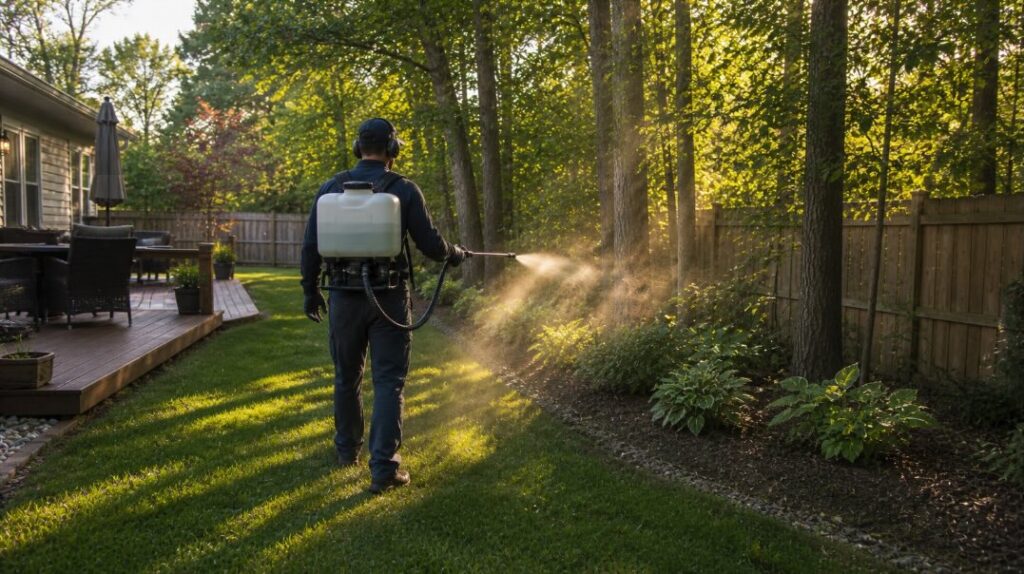
Callahan’s Termite and Pest Control offers a 7-treatment mosquito program designed around the Ocean County season. The first application is recommended in April, before the initial breeding cycle peaks. Treatments continue at regular intervals through the fall, maintaining pressure on mosquito populations as conditions shift throughout the summer.
Each visit includes treatment of the areas where mosquitoes rest and breed on the property. Shaded zones along fence lines, beneath decks, around landscape beds, and under tree canopies are treated directly. Standing water sources are identified and flagged for the homeowner.
The program is available to residential and commercial clients across Ocean, Monmouth, and Middlesex counties. Restaurants, outdoor event venues, and childcare facilities along the commercial corridors of Route 9, Route 70, and Hooper Avenue benefit from consistent, scheduled service during the active months.
What Homeowners Can Do Between Treatments
Professional treatment handles the bulk of mosquito reduction. A few habits between visits help maintain results.
Gutters should be cleaned in early spring and checked monthly. Birdbaths and pet bowls need fresh water at least twice a week. Any container capable of holding water should be emptied or turned over after rain. Yard debris, leaf piles, and thick ground cover near the foundation should be cleared to reduce resting habitat.
Switching outdoor lighting near seating areas to yellow or warm-toned bulbs reduces the attraction for many insect species, including mosquitoes. Positioning fans on decks and patios also disrupts mosquito flight patterns and provides relief during evening hours.
Do Not Wait for the First Bite
Mosquito populations in Ocean County build momentum before most people realize the season has started. The eggs are already in the ground. The larvae are already in the water. Once temperatures hold above 50 degrees in early spring, the cycle is underway.
Comprehensive Pest Control Solutions for NJ Properties
New Jersey’s mix of residential developments, commercial zones, shore and wooded areas makes it a hotspot for pest activity. We provide full-service pest management that targets the most pressing concerns:
Call 732-899-3030 or Contact Us to speak with a Monmouth & Ocean County Area Pest Control Expert
Related Posts